
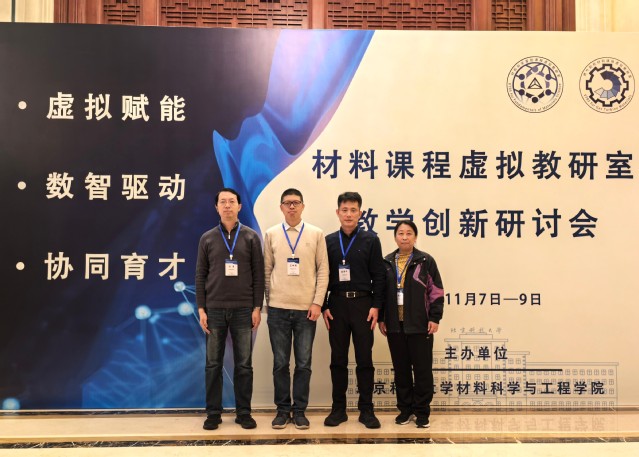
To promote teaching reform and talent cultivation in the field of materials science and to advance the development of digital and intelligent education, representatives from the College of Materials Science and Engineering traveled to Beijing from November 7 to 9 to attend the First Symposium on Teaching Innovation of Virtual Teaching and Research Offices for Materials Courses.
The symposium, themed “Virtual Empowerment · Digital Intelligence · Collaborative Talent Development”, brought together member universities and enterprise partners of the “Virtual Teaching and Research Office for Fundamental Courses in Materials Science” and the “Virtual Teaching and Research Office for Gas Turbine Materials in Key Fields”. The event gathered over 300 leaders, experts, and scholars from more than 100 institutions across the country. A total of 39 invited experts and distinguished guests delivered keynote presentations covering a range of cutting-edge topics, including AI-empowered curriculum development, construction of knowledge graphs, integration of ideological and political education into courses, innovation in experimental teaching, collaborative development of teaching materials and resources, and optimization of virtual teaching and research platforms.
The College was invited to deliver a plenary report titled “Innovation and Practice in Materials Talent Cultivation Based on the Integration of Science and Education for Maritime Power Development”. The presentation introduced the College’s innovative talent training model centered on the interdisciplinary integration of “Ocean + Materials” and the core concept of “scientific research–education integration”. The unique “OUC Model” with maritime characteristics drew considerable attention and recognition from participating experts.
During the symposium, the delegation also visited the Digital and Intelligent Experimental Teaching Platform of the School of Materials Science and Engineering at the University of Science and Technology Beijing. The team experienced teaching modules integrating synchronous online instruction, VR-assisted learning, and hands-on experimental operation.
This symposium provided a valuable opportunity for the College to learn from advanced teaching models and best practices, broaden its perspectives on AI-driven education, ideological and political education integration, and virtual teaching and research optimization. It also strengthened communication and collaboration with universities nationwide, contributing to the further advancement of the University’s materials discipline.
Text/Photo:Du Qing.