
Recently, the research team led by Professor Huanlei Wang from the College of Materials Science and Engineering at Ocean University of China has made a series of significant advances in the field of carbon-based energy storage materials. Their latest findings have been successively published in high-level domestic journals Advanced Powder Materials, Nano Research, Green Energy & Environment, as well as in the internationally renowned review journal Coordination Chemistry Reviews.
Carbon materials, known for their abundant availability, excellent electrical conductivity, chemical stability, and highly tunable porous structures, have been widely recognized for their potential in secondary batteries and supercapacitors. With the rapid development of emerging systems such as sodium-ion batteries, potassium-ion batteries, and zinc-ion capacitors, structural engineering and heteroatom doping of carbon materials have become key strategies for enhancing performance. By optimizing pore structures, modifying surface functional groups, and incorporating heteroatoms, researchers can effectively tailor the electronic structure, surface reactivity, and ion diffusion pathways of carbon materials, thereby greatly improving specific capacity, rate capability, and cycling stability.
For hard carbon anodes used in sodium-ion batteries, the team developed a synergistic strategy combining CO₂ etching with high-temperature carbonization to construct hard carbon with abundant closed-pore structures. Using nitrogen-rich chitosan as the precursor, CO₂ etching first creates open pores, which then evolve into closed pores during secondary heat treatment. Nitrogen incorporation stabilizes the carbon framework and improves closed-pore retention and plateau-capacity contribution. The optimized hard carbon electrode delivers a high reversible capacity of 388.8 mAh g⁻¹ at 0.05 A g⁻¹, retains 83.8% of its capacity after 800 cycles, and achieves a full-cell energy density of 165.2 Wh kg⁻¹. The corresponding study, titled “Synergistic CO₂ etching and carbonization induces closed-pore structures for plateau-dominant sodium storage”, was published in Nano Research (IF 9.0). Master student Wancheng Ren (Class of 2023) and Ph.D. candidate Lei Yang (Class of 2022) are co-first authors.
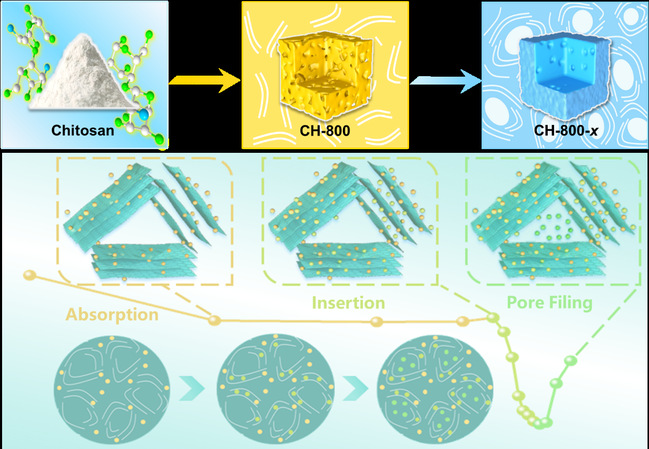
Figure 1. Hard carbon preparation flow chart and sodium storage mechanism diagram
Addressing the challenges of volume expansion and slow reaction kinetics in potassium-ion battery carbon anodes, the team fabricated pearl-necklace-like Se-doped hollow carbon nanofibers via electrospinning. The hollow structure enhances electrolyte penetration and ion transport, while Se doping generates abundant defects and active sites, significantly improving K-ion diffusion and storage capability. The anode delivers a high capacity of 470 mAh g⁻¹ at 0.05 A g⁻¹, and retains 167 mAh g⁻¹ after 6000 cycles at 5 A g⁻¹. The assembled potassium-ion hybrid capacitor achieves an energy density of 145 Wh kg⁻¹, with 85% capacity retention after 10,000 cycles. The related paper, titled “Pearl-Necklace Structured Se-Doped Hollow Carbon Nanofibers for High-Capacity and Ultrastable Potassium Ion Storage”, was published in Green Energy & Environment (IF 14.6), with Yali Lu (Master student, Class of 2023) as first author.
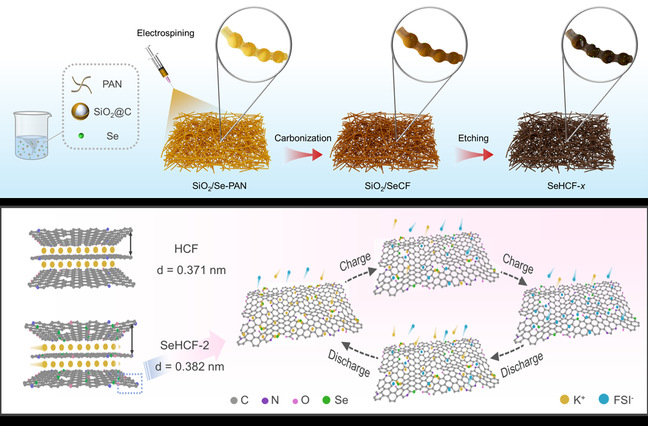 Figure 2. Schematic diagram of material preparation and potassium storage mechanism
In the field of zinc-ion hybrid supercapacitors, the group developed carbon-fiber cathode materials featuring hierarchical porosity and ZnFeN₆ coordination structures through electrospinning and controlled carbonization. The introduction of Fe modulates the local electronic structure of Zn active sites, enhancing d-orbital hybridization and ion adsorption. With a high specific surface area of 879 m² g⁻¹, the material greatly improves ion transport and charge transfer. Electrochemical tests show a capacity of 213 mAh g⁻¹ at 0.1 A g⁻¹ and 128 mAh g⁻¹ at 10 A g⁻¹, while maintaining 88.6% capacity after 20,000 cycles. The study, titled “Dual-Metallic Site Regulation Boosts Charge Storage in Zinc-Ion Hybrid Supercapacitors”, was published in Advanced Powder Materials (IF 24.9). Ph.D. candidate Chunliu Zhu (Class of 2022) is the first author.
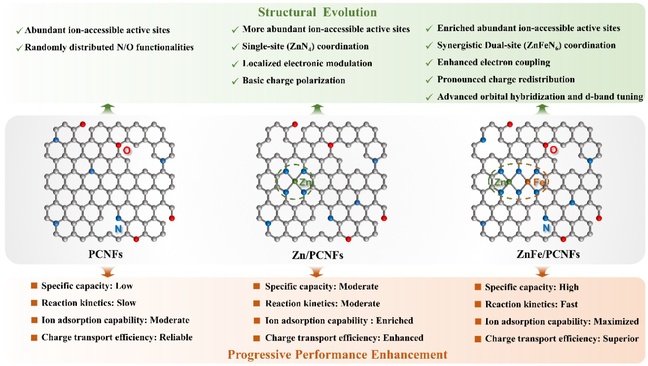 Figure 3. Correlation diagram between structural optimization and electrochemical performance improvement
Building on their continuous research in zinc-ion capacitors, the team further conducted a comprehensive review of the roles of carbon materials in electrodes and electrolyte systems, summarizing key mechanisms in ion adsorption, interface engineering, and structural design. The review also provides insights into carbon-based regulation of zinc deposition behavior and mitigation of electrode failure. Offering a broad perspective on the application of carbon nanomaterials in aqueous energy storage, the work discusses prospects for industrial-scale production and practical device deployment. The review, titled “Unlocking the Potential of Multifunctional Carbon Nanomaterials for Zinc-Ion Hybrid Capacitors: Mechanisms, Applications, and Challenges”, was published in Coordination Chemistry Reviews (IF 23.5), with doctoral student Yafei Zhang (Class of 2024) as first author.
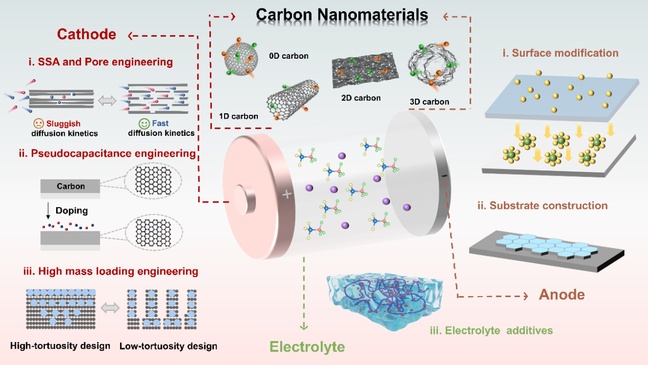 Figure 4. Schematic diagram of the multifunctional application of carbon nanomaterials in zinc-ion capacitors
These achievements systematically reveal the mechanisms by which structural engineering and heteroatom doping of carbon materials enhance performance across multiple energy storage systems. The findings provide important theoretical support and experimental foundations for developing high-energy-density, long-lifespan, and low-cost next-generation energy storage devices. The work was supported by the National Natural Science Foundation of China, the Taishan Scholar Program for Young Experts of Shandong Province, the Major Basic Research Project of Shandong Natural Science Foundation, among other funding sources. Ocean University of China is listed as the primary corresponding affiliation for all the publications.
Article Link:https://www.sciencedirect.com/science/article/pii/S2772834X25001009
https://www.sciopen.com/article/10.26599/NR.2025.94908108
https://www.sciencedirect.com/science/article/pii/S246802572500264X
https://www.sciencedirect.com/science/article/pii/S0010854525009087
Text/Figures: Zhu Chunliu, Lu Yali.