
Professor Hou Chunchao’s research group at the School of Materials Science and Engineering, Ocean University of China, has made progress in the electrocatalytic upcycling of carbon-containing waste. The findings were published in Nature Communications under the title “Modulate adsorption via Co²⁺–O–Coᵟ⁺ asymmetric pairs toward efficient upcycling of plastic waste to commodity chemicals.”
Against the backdrop of the global energy transition and China’s carbon peaking and carbon neutrality goals, plastic waste recycling is an important area of research for both resource circularity and marine pollution control. Conventional plastic recycling often produces lower-value materials and does not adequately prevent polyethylene terephthalate (PET) waste from entering the ocean. There, PET can slowly break down into microplastics, accumulate along food chains and harm coastal ecosystems. Developing efficient electrocatalytic systems that convert PET into higher-value chemicals could help address the limitations of conventional recycling while supporting pollution reduction and marine ecosystem protection.
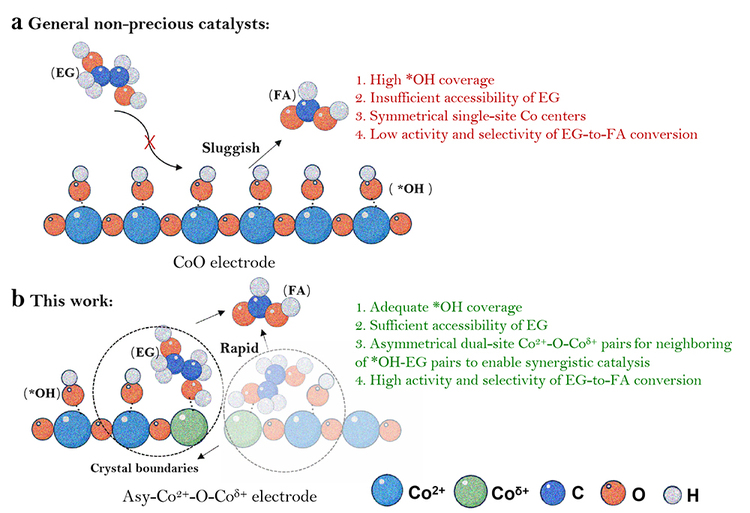
Figure 1. Comparison of EG oxidation schematic diagrams between Asy-Co2+-O-Coδ+ catalyst and traditional CoO electrodes
Ethylene glycol (EG) oxidation is a central reaction in the electrochemical upcycling of PET. A key challenge is the competing adsorption of hydroxyl species (*OH): although *OH is needed to break the carbon–carbon bond in EG, excessive adsorption can occupy active sites and inhibit activation of the substrate, limiting the production of the target product, formic acid.
To address this challenge, the research group used grain boundary engineering to construct asymmetric Co²⁺–O–Coᵟ⁺ bridging active sites in a non-precious cobalt oxide catalyst. These sites enabled differentiated co-adsorption of *OH and EG, substantially lowering the reaction energy barrier for formic acid production. The system achieved a Faradaic efficiency of 96.12% and a selectivity of 93.75%. In a membrane electrode assembly (MEA) device, it reached an industrial-level current density of 1 A·cm⁻² and operated stably for 500 hours. A techno-economic analysis estimated a net profit of approximately US$527.4 per tonne of PET.
The work provides a high-performance catalyst for the electrochemical upcycling of PET and offers a new approach to constructing bifunctional asymmetric active sites through grain boundary engineering. It also provides a technical reference for addressing marine plastic pollution and advancing the circular use of marine carbon resources.
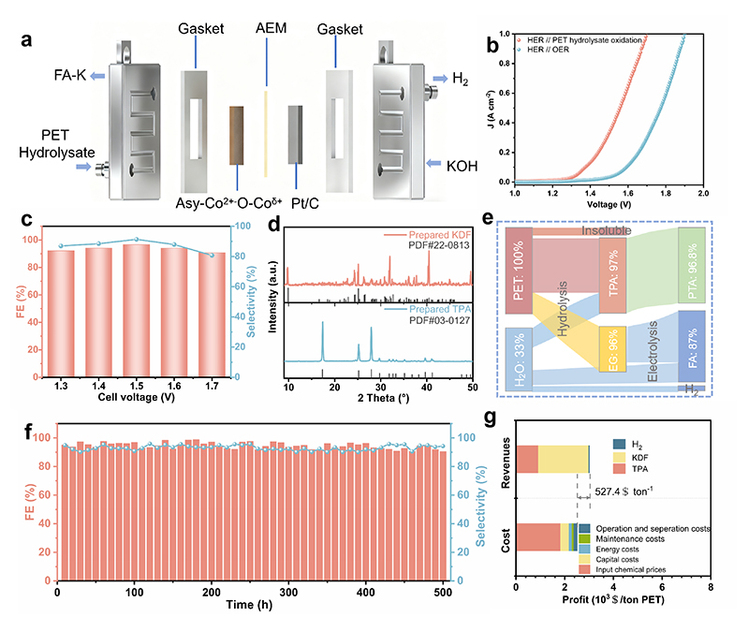
Figure 2. PET upcycling applications and full-process economic evaluation
Chang Xingchen, a master’s student in materials engineering who joined the School in 2024, is the paper’s first author. Ocean University of China is the first corresponding institution. The research was supported by the National Natural Science Foundation of China, the Shandong Province Taishan Scholars Program, a major basic research project of the Shandong Provincial Natural Science Foundation, the Shandong Excellent Young Scientists Fund for overseas researchers, Ocean University of China’s Young Talent Startup Fund and the Fundamental Research Funds for the Central Universities.
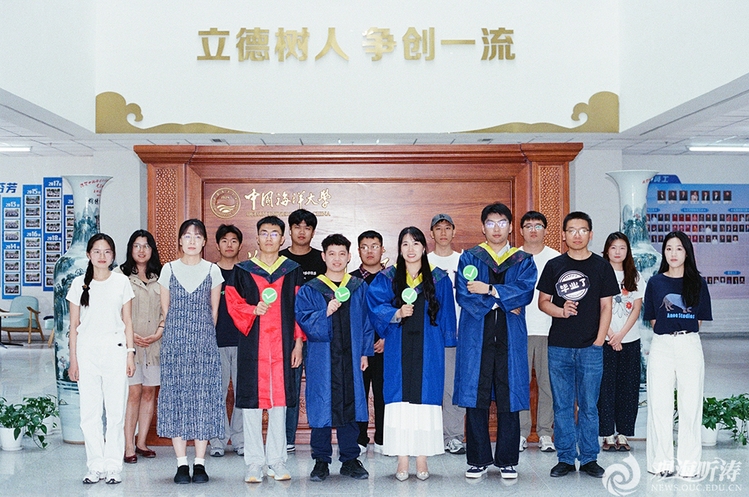
Photo of Professor Hou's group
Text: Chang Xingchen and Yang Fan
Paper: https://doi.org/10.1038/s41467-026-77783-8
Editor: Zhao Xiyun
Responsible editor: Liu Li