
To further implement the fundamental mission of fostering virtue through education, deepen classroom teaching reform, and continuously enhance teaching quality and faculty instructional competence, the School of Materials Science and Engineering held its 7th Classroom Teaching Innovation Competition on the afternoon of June 29. The event was chaired by Vice Dean Wang Huanlei.
In her opening remarks, Dean Cui Hongzhi emphasized that classroom teaching is the primary platform for talent cultivation and a critical component of fulfilling the mission of moral education. She encouraged faculty members to use the competition as an opportunity to renew their educational philosophies, align teaching practices with the requirements of high-quality talent cultivation, and further advance classroom teaching reform. She also stressed the importance of optimizing course design and content, strengthening the integration of information technology into teaching, and promoting the coordinated development of knowledge acquisition, ability cultivation, and value formation.
During the competition, participating faculty members delivered teaching demonstrations based on their undergraduate courses and submitted supporting materials, including teaching design plans, course syllabi, instructional slides, and reports on teaching innovation. The presentations featured well-structured lesson designs, clearly defined learning objectives, and the effective use of case-based learning, problem-oriented instruction, and digital teaching tools. The participants demonstrated a strong commitment to student-centered teaching and continuous instructional improvement, showcasing both solid disciplinary expertise and excellent teaching skills.
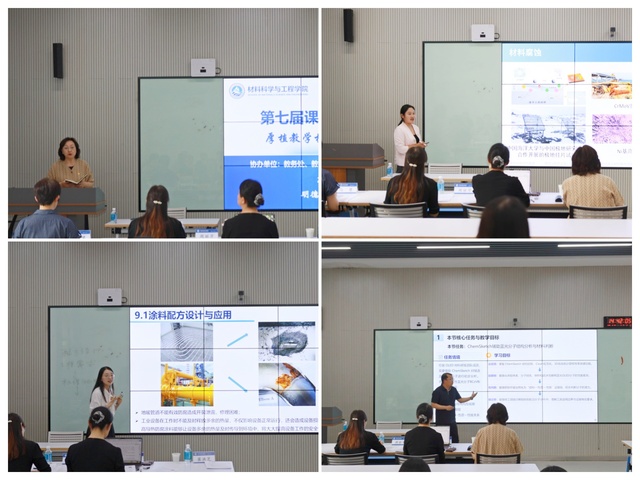
The director's speechandthe contestants' competition scene
The competition invited a panel of distinguished teaching experts from across the university to serve as judges, including Professor Tang Ruichun and Professor Ma Hui from the Faculty of Information Science and Engineering, Professor Zhou Liqin from the College of Engineering, Professor Liu Zunying from the College of Food Science and Engineering, and Professor Zhang Yue from the School of Materials Science and Engineering. The judges evaluated the presentations from multiple perspectives, including instructional design, content organization, teaching methods, classroom interaction, teaching innovation, and overall instructional effectiveness. They also provided constructive feedback and practical suggestions for improvement, fostering meaningful academic exchange and fully reflecting the philosophy of “promoting teaching through competition and achieving mutual growth through instructional exchange.”
Following the evaluation, Xia Chenghui, Feng Huimeng, and Tian Huiyun were awarded the First Prize, Second Prize, and Third Prize, respectively. Du Junhua, Party Secretary of the School, presented the awards to the winners. In her closing remarks, she highly commended the participants for their outstanding teaching performances and emphasized that the quality of classroom teaching is directly linked to the quality of talent cultivation and must remain a top institutional priority. She noted that the School has made continuous progress in teaching reform and educational achievements in recent years and encouraged faculty members to further focus on classroom teaching, improve teaching evaluation and incentive mechanisms, and continue advancing teaching assessment, instructional competitions, and curriculum development to deepen educational reform.
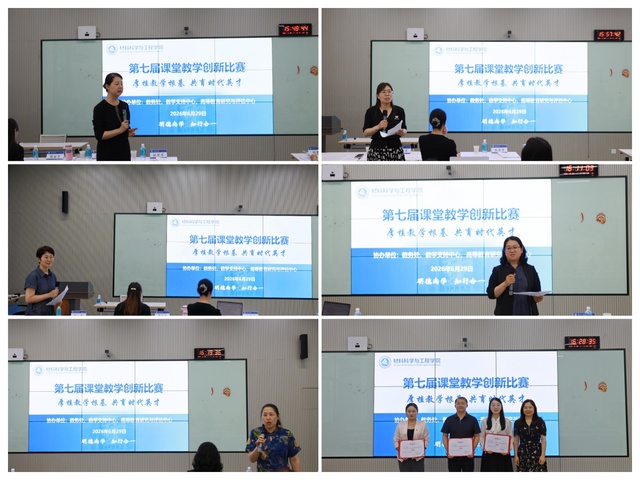
Expert judgesprovide comments andawards
The competition was organized by the School of Materials Science and Engineering and co-sponsored by the Academic Affairs Office, the Teaching Support Center, and the Center for Higher Education Research and Evaluation. Teaching supervisors, department heads, course coordinators, and faculty members attended the event as observers. By providing a valuable platform for sharing teaching experiences and showcasing instructional excellence, the competition contributed to the innovation of classroom teaching models, the deepening of educational reform, and the enhancement of talent cultivation quality. The School will continue to strengthen its teaching-centered philosophy and further improve classroom instruction to cultivate highly qualified materials professionals with solid academic foundations, innovative capabilities, and a strong sense of social responsibility.
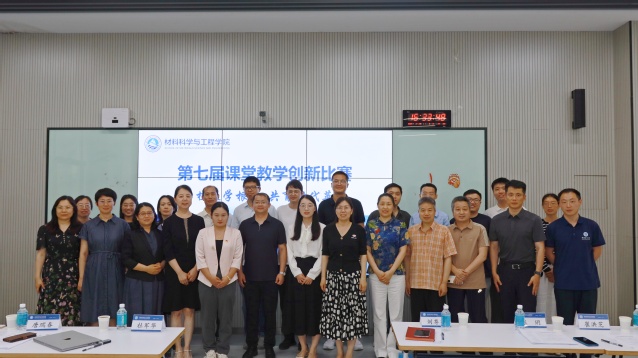
Group photo
Text: Wang Huanlei
Photos: Deng Fei