
Recently, a research group led by Professor Hou Chunchao from the School of Materials Science and Engineering at Ocean University of China has made significant advances in the field of green value-added electrocatalysis. The related findings have been published in two leading international journals, Journal of the American Chemical Society and Angewandte Chemie International Edition.
Driven by the dual imperatives of China’s “dual carbon” goals and environmental pollution control, traditional thermochemical conversion routes based on fossil fuels are increasingly constrained by high energy consumption and intensive carbon emissions, making it difficult to balance resource efficiency and environmental sustainability. In contrast, electrocatalysis powered by renewable energy, using water as a green reaction medium, can generate highly reactive species such as adsorbed hydrogen (*H) and hydroxyl (*OH) under mild conditions. This offers new opportunities for the high-value conversion of waste carbon resources and the efficient production of clean energy, such as green hydrogen. However, the efficiency of aqueous electrocatalytic systems remains limited by key scientific challenges, including interfacial water activation, migration and coupling of reactive intermediates, and the complex synergy of multi-step reaction pathways.
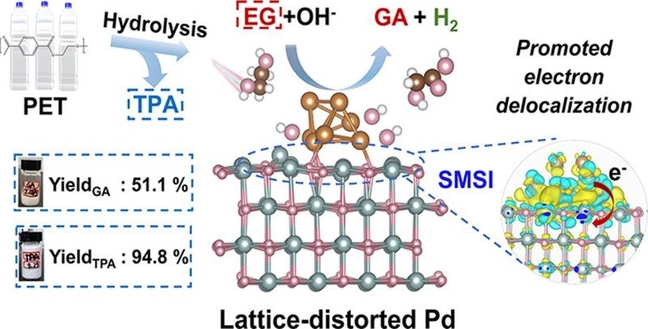
Fig. 1. Schematic diagram of electron delocalization effect driven by lattice distortion
Addressing these challenges, the research team focused on the concept of “green value-added electrocatalysis” and combined environmentally friendly material design with interface engineering. Their work elucidates the kinetics of water activation and the reaction pathways of active species, enabling both high-value utilization of industrial waste and efficient energy conversion, thereby contributing to a new paradigm of “pollution reduction, carbon mitigation, and resource recycling.”
In the area of plastic waste recycling, the electrochemical upgrading of polyethylene terephthalate (PET) faces challenges such as low selectivity, catalyst deactivation, and limited scalability. To overcome these issues, the team engineered lattice-distorted palladium catalysts (l-Pd) by tuning metal–support interactions. The lattice distortion induces electron delocalization, enabling efficient electrochemical conversion of ethylene glycol into glycolic acid. This work provides a new strategy for designing high-performance catalysts for PET upcycling, delivering both environmental and economic benefits. The study, titled “Lattice-Distortion-Driven Electron Delocalization Enables Efficient Electrosynthesis of Glycolic Acid and Terephthalic Acid from Plastic Wastes,” was published in Journal of the American Chemical Society. The first author is Master’s student Wang Han (Class of 2023), with Ocean University of China as the primary corresponding institution.
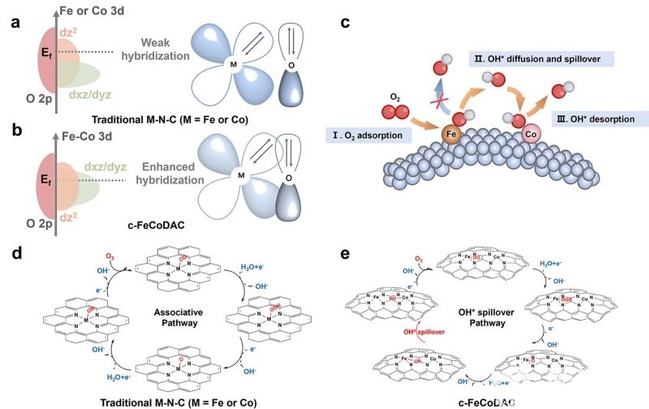
Fig. 2. Schematic diagram of the mechanism of hydroxyl overflow effect
In the field of oxygen reduction reaction (ORR) catalysis, commercial Pt/C catalysts are hindered by high cost and limited durability. To address this, the team designed an out-of-plane coordinated Fe–Co dual-atom catalyst (c-FeCoDAC). This unique configuration enhances d–p orbital hybridization and optimizes OOH* adsorption, shifting the rate-determining step of ORR to OH* desorption. It also induces spontaneous hydroxyl spillover from Fe to adjacent Co sites, significantly lowering the activation energy. This study offers new insights into the design of curved-structure M–N–C catalysts and strategies to overcome traditional scaling relationships for efficient ORR catalysis. The work, titled “Hydroxyl Spillover in Out-of-Plane Coordinated Fe-Co Dual-Atom Catalysts to Expedite Oxygen Electroreduction,” was published in Angewandte Chemie International Edition. The first author is Ph.D. candidate Dong Xiaoxiao (Class of 2023), with Ocean University of China as the primary corresponding institution.
These studies were supported by the National Natural Science Foundation of China, the Taishan Scholars Program of Shandong Province, the Shandong Provincial Major Basic Research Program, the Shandong Excellent Young Scientists Fund (Overseas), the Ocean University of China Young Talent Program, and the Fundamental Research Funds for the Central Universities.
https://doi.org/10.1021/jacs.5c17861
https://doi.org/10.1002/anie.202521225
Editor: Zhao Xiyun
Reviewed by: Liu Li