
Recently, a research group led by Associate Professor Chen Jingwei from the School of Materials Science and Engineering developed a low lattice-mismatch interface-modified electrode that enables uniform distribution of interfacial electric field, current density, and ion concentration. This advancement significantly improves the long-term stability, bistability, and photothermal regulation efficiency of electrochromic smart windows. The findings were published in the leading international journal Energy & Environmental Science (Impact Factor: 31) under the title “Engineering Low Lattice Mismatch Interface Layer for Durable and Bi-stable Dynamic Smart Windows Based on Reversible Metal Electrodeposition.”
The paper lists Ocean University of China as the first affiliation, with Associate Professor Chen Jingwei serving as the corresponding author and Master’s student He Tongzhuang (Class of 2023) as the first author.
Driven by increasing demand for building energy efficiency amid rapid urbanization, reversible metal electrodeposition (RMED) devices—featuring broadband dynamic modulation and high energy efficiency—have attracted significant attention for smart window applications. However, uncontrolled electrode/electrolyte interfacial structures often lead to non-uniform metal deposition, poor cycling stability, and difficulty in achieving bistability, thereby limiting practical deployment.
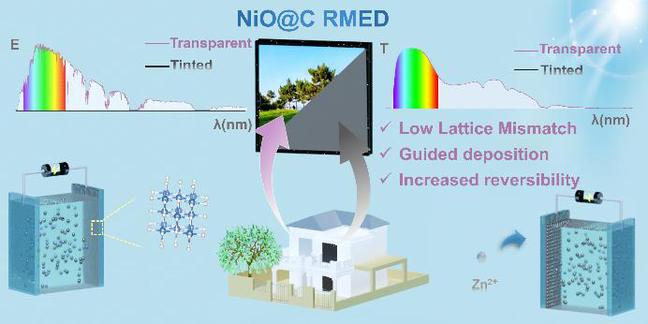
Figure 1. The scheme of the structure and application of NiO@C-RMED
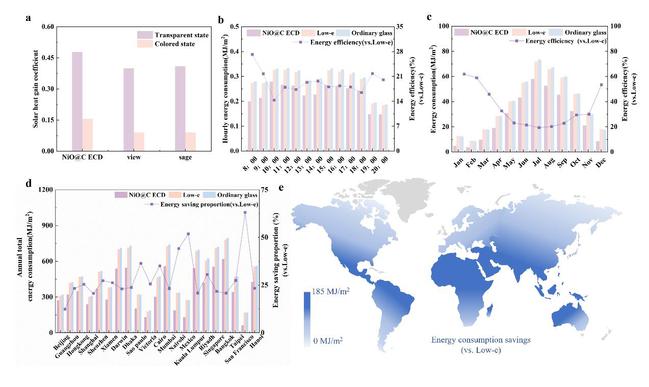
Figure 2. Energy-saving potential simulation of NiO@C-RMED
To address these challenges, the research team designed and constructed a NiO@C interface modification layer with low lattice mismatch on fluorine-doped tin oxide (FTO) transparent conductive glass substrates. This interface layer effectively reduces residual stress between the deposited metal layer and the substrate, enabling controlled nucleation and uniform growth. Both experimental results and computational simulations demonstrate that the engineered interface promotes homogeneous distributions of electric field, ion concentration, and current density, facilitating rapid and uniform Zn²⁺ deposition and dissolution. As a result, interfacial activation energy is reduced, coloration efficiency is enhanced, and neutral-color switching is achieved.
The resulting NiO@C-based RMED device enables reversible switching between a transparent state and a color-neutral dark state, allowing dynamic regulation of indoor–outdoor light and heat exchange. It also demonstrates significant thermal insulation and energy-saving advantages in practical applications. Simulation results indicate that the device achieves a solar heat gain coefficient modulation of up to 0.38, comparable to commercial technologies. Building energy simulations across multiple global climate zones further show that, compared with conventional low-emissivity (Low-e) glass, the device can reduce daily energy consumption by approximately 20% in tropical regions (e.g., Bangkok) and improve winter energy efficiency by up to 60% in subtropical regions (e.g., Taipei). Across 21 representative cities worldwide, annual energy savings exceed 20%, with maximum savings reaching 185 MJ·m⁻² in tropical climates.
This work not only enhances the photothermal regulation performance and energy-saving potential of NiO@C-based RMED devices, but also provides an effective interface engineering strategy for developing high-performance, long-lifetime dynamic smart windows. It further offers new design insights for energy optoelectronic devices and contributes to technological advancements toward zero-carbon buildings.
This research was supported by the National Natural Science Foundation of China, the Shandong Provincial Excellent Young Scientists Fund (Overseas), the Ocean University of China Young Talent Program, and the Fundamental Research Funds for the Central Universities.
Original Article: https://doi.org/10.1039/D5EE07238G
Text/Photos by: He Tongzhuang