
Recently, a research team led by Professor Shougang Chen from the College of Materials Science and Engineering at Ocean University of China (OUC) reported a significant breakthrough in polyurethane protective coatings, with their findings published in the internationally renowned journal Advanced Functional Materials. The team developed a novel “hierarchically interfacial programmed” multifunctional polyurethane coating that integrates photothermal self-healing, ultraviolet resistance, and long-term corrosion protection, offering a transformative solution for corrosion protection in marine engineering, transportation, and related fields.
Marine structures such as naval vessels, offshore platforms, and island facilities are exposed to harsh environments characterized by high salinity, high humidity, intense UV radiation, and cyclic wet–dry conditions. Mechanical damage, fatigue aging, and coating delamination significantly shorten service lifetimes. Enhancing wear resistance, adhesion stability, and reducing maintenance frequency are therefore critical for ensuring the safety of maritime infrastructure and national defense.
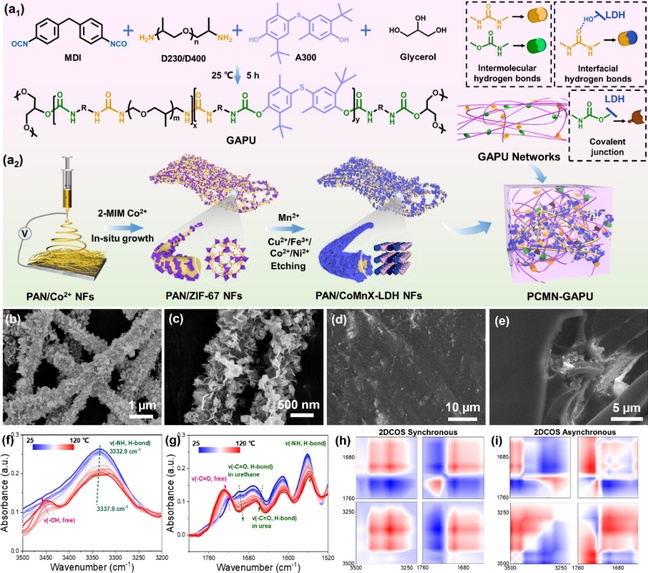
Figure 1Schematic diagram of the preparation and structure of self-healing weather-resistant PCMN-GAPU coating in this study
Focusing on widely used polyurethane materials for marine protection, the team developed a hierarchically structured photothermally enhanced nanofiber/polyurethane composite coating. Specifically, they constructed an oxidation-resistant polyurethane (GAPU) composite coating reinforced with PAN@CoMnNi-LDH nanofibers (Fig. 1). Using electrospinning combined with in situ multi-metal etching, photothermal-responsive nanofibers decorated with layered double hydroxide (LDH) nanosheets were fabricated and embedded into a polyurethane matrix containing A300 antioxidant units. This design forms a synergistic network of “functional fiber skeleton + stable polymer matrix.” By integrating molecular design with macroscopic performance engineering, the study establishes a unified mechanism combining photothermal self-healing and enhanced weather resistance, breaking through the limitations of conventional “static corrosion protection” approaches.
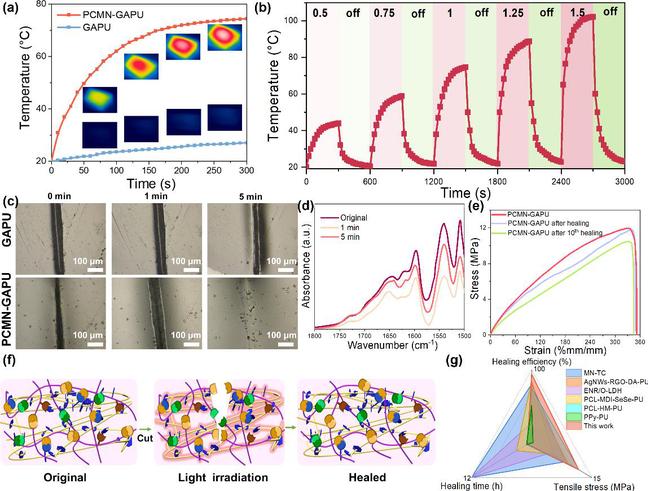
Figure 2PCMN-GAPU self-healing characterization
Through interface engineering and multi-scale synergistic enhancement, the coating achieves rapid light-driven self-repair, improved wear resistance, and long-term durability. The PAN/CoMnNi-LDH nanofibers, fabricated via in situ multi-metal ion deposition and etching, exhibit broad-spectrum light absorption and high photothermal conversion efficiency. Under simulated sunlight (1 sun), surface scratches can be repaired within 5 minutes, with a tensile strength recovery of up to 98.3% (Fig. 2). The coating also demonstrates significantly enhanced UV resistance, with only 2.04% gloss loss after 360 hours of accelerated UV aging, while maintaining elongation at break above 500%, indicating excellent weatherability. Electrochemical tests over 60 days show an impedance modulus |Z|0.01Hz of up to 6.16 × 10⁸ Ω·cm², far exceeding that of conventional polyurethane coatings.
Combining FTIR, Raman spectroscopy, DMA, XPS, density functional theory (DFT) calculations, and molecular dynamics (MD) simulations, the study systematically elucidates the synergistic protection mechanisms from multiple perspectives, including molecular orbital energy levels, interfacial interactions, and polymer chain dynamics. The results reveal that:Photothermal enhancement: multi-metal-doped LDH improves electronic transition efficiency and light absorption, enabling efficient heat generation to activate chain mobility; Interface engineering: strong hydrogen bonding and compatibility between PAN/CoMnNi-LDH fibers and the GAPU matrix suppress microcrack propagation and improve fatigue resistance and healing efficiency; Synergistic weather resistance: A300 units enhance photostability by lowering HOMO energy levels, inhibiting radical formation and bond scission, while interfacial hydrogen bonding further stabilizes the structure (Fig. 3). This self-healing, weather-resistant anticorrosion coating is enabled by the integration of electronic structure regulation, molecular chain design, and interfacial network engineering, ensuring structural integrity during photothermal repair and enabling long-term, stable full life-cycle protection in harsh marine environments. Beyond developing a high-performance coating, this work presents a scalable design paradigm for multifunctional materials, achieving the integration of self-healing, anticorrosion, and anti-aging properties through molecular and nanostructural synergy.
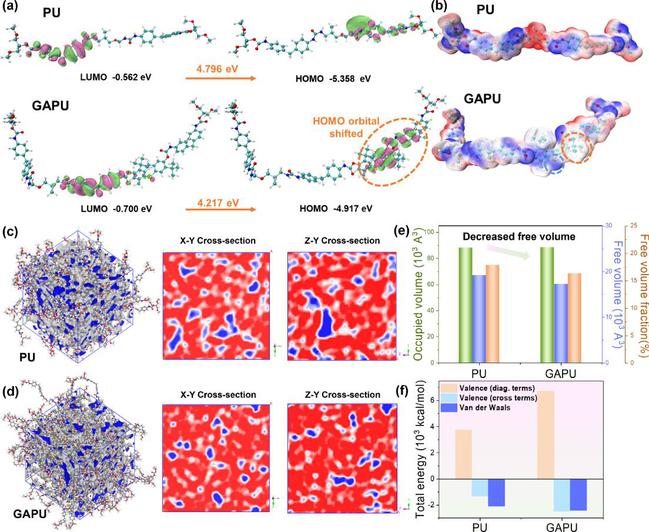
Figure 3 Simulation results are calculated at multiple scales
As global demand for infrastructure durability continues to grow, such “sunlight-driven self-healing” smart coatings are expected to play a key role in green maintenance, reduced manual intervention, and extended service life, providing strong material support for the sustainable protection of marine equipment.
This work was supported by the National Natural Science Foundation of China, the Shandong Major Innovation Program, the Shandong Natural Science Foundation, and the Fundamental Research Funds for the Central Universities.
Article Link
https://advanced.onlinelibrary.wiley.com/doi/10.1002/adfm.202525713
Text/Images: Lin Cao