
Recently, a research team led by Professor Mingliang Sun from the College of Materials Science and Engineering at Ocean University of China (OUC) has made significant advances in the field of organic room-temperature phosphorescent (RTP) materials. The related work, entitled “Isomer design unlocks rainbow phosphorescence,” has been published online in the prestigious multidisciplinary journal Nature Communications. This study demonstrates that full-spectrum visible phosphorescence color tuning at room temperature can be achieved through a simple molecular isomer design strategy, providing a new pathway for the development of full-color organic phosphorescent materials.
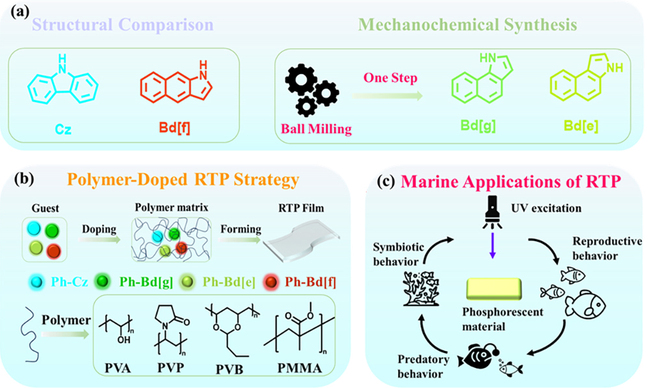
Figure 1. Schematic diagram of material chemical structure, polymer doping and marine application
Organic RTP materials are capable of emitting light continuously after the excitation source is removed at room temperature. Owing to this unique afterglow property, they hold broad application potential in areas such as information anti-counterfeiting, bioimaging, optoelectronic devices, and emergency signage. However, a longstanding challenge in this field is how to achieve stable and predictable multicolor emission, especially across the full visible spectrum, without relying on complex molecular modifications or heavy-metal systems.
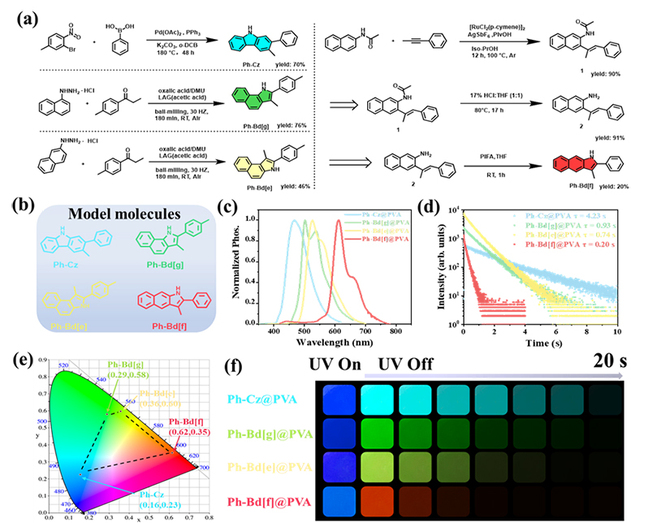
Figure 2. Molecular synthesis route and photophysical properties
To address this issue, the research team proposed a concise molecular isomer regulation strategy. By constructing a unified system based on carbazole (Cz) and its benzoindole isomers (Bd[f], Bd[e], and Bd[g]), the researchers systematically investigated the effect of nitrogen atom positioning on luminescent properties while maintaining a fixed molecular framework (Fig. 1). In addition, the team developed a green mechanochemical ball-milling method to enable efficient, solvent-free synthesis of key isomers.
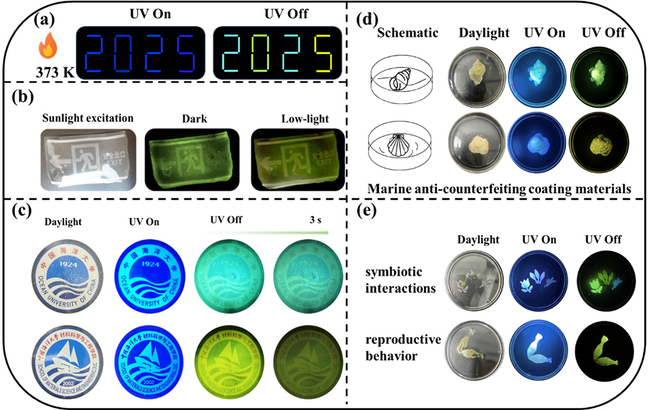
Figure 3. Phosphorescent materials for anti-counterfeiting and marine applications
The results reveal that simply altering the position of the nitrogen atom allows the material system to achieve afterglow emission spanning from blue, green, and yellow to red, covering the entire visible spectrum and exhibiting “rainbow phosphorescence.” Notably, the carbazole-based material exhibits an ultralong phosphorescence lifetime of up to 4.23 seconds. Mechanistic studies indicate that nitrogen positioning modulates the molecular energy levels, while strong hydrogen-bonding interactions between carbazole and the polymer matrix effectively suppress energy dissipation, thereby prolonging emission lifetime (Fig. 2).
Furthermore, the material system demonstrates excellent environmental stability. It maintains stable luminescence across various polymer matrices and retains performance under high-temperature and seawater conditions, while also enabling afterglow under daylight excitation. Leveraging these advantages, the team demonstrated applications including high-temperature-resistant anti-counterfeiting patterns, daylight-activated emergency signage, and marine functional coatings. In addition, the emission wavelengths of these materials overlap with the visual sensitivity ranges of certain marine organisms, offering new tools for related studies.
This work establishes a minimalist structural design principle for full-color organic phosphorescent materials, opening new avenues for their development and demonstrating promising application prospects in information security, marine engineering, and biomedicine (Fig. 3).
Ocean University of China is the primary affiliation of this work. Professor Mingliang Sun is the corresponding author, and Xinyue Xu, a Ph.D. candidate from the College, is the first author. The research was supported by the National Natural Science Foundation of China, the Shandong Natural Science Foundation, the National Key R&D Program of China, and the Shandong Key R&D Program, among others. Technical support was provided by the Institute of Ion-Plasma and Laser Technologies of the Academy of Sciences of Uzbekistan and the Analytical and Testing Center of Qingdao University of Science and Technology.
Text: Xinyue Xu, Mingliang Sun
Article Link: https://www.nature.com/articles/s41467-026-70784-7
Editor: Zhao Xiyun
Responsible Editor: Zhao Xiyun